WTF Where’s the Fabric Embroidery
If you run a small embroidery business or sell handmade goods on Etsy, you know that finding designs with personality is just as important as finding technically sound files. We are constantly scanning platforms like Creative Fabrica for that next hit—something that stops the scroll, makes a customer smile, and translates well into a physical product. Recently, I came across the WTF Where s the Fabric design, and it immediately caught my eye. It promises bold, manually digitized lettering with a dash of humor and a hint of sass. For any Etsy seller looking to expand their craft business inventory, this design feels like a strong contender for a bestseller.
Visual Personality and Market Fit
When evaluating a new embroidery file, the first thing I look at is the vibe. Does it feel premium? Rustic? Minimal? The title alone tells us exactly what we are dealing with here. This isn’t a delicate floral pattern or a traditional monogram. WTF Where s the Fabric is playful, bold, and unapologetically funny. It leans heavily into the modern, slightly chaotic reality of sewing.
This design fits perfectly into the "funny" and "bold" categories. It appeals directly to sewists who have spent hours hunting for the right material only to realize it’s missing. That is a universal pain point in our community, which means the emotional connection to the design is instant. For an Etsy seller, this kind of relatable humor is gold. It transforms a simple piece of fabric into a shared inside joke between the maker and the wearer. It feels less like a decorative item and more like a statement piece, which is increasingly popular among younger demographics and hobbyists who want their gear to reflect their personality.
Product Application Ideas
The versatility of WTF Where s the Fabric is where its true value lies. Because the text is the hero, it works exceptionally well on items where space is limited but visibility is high. Here is how I would integrate this machine embroidery design into a product line:
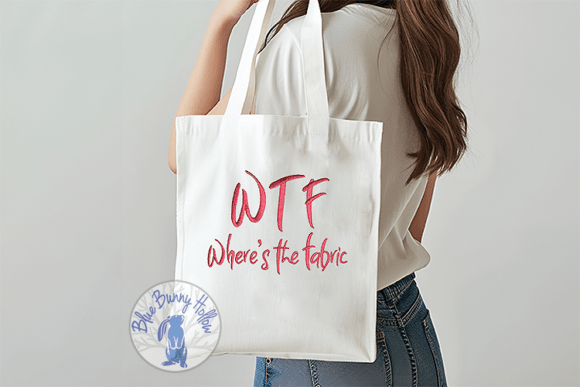
- Tote Bag Design: A sturdy canvas tote is the ultimate accessory for carrying supplies. Placing this design on the front pocket or center panel of a tote bag design creates an immediate conversation starter at craft fairs or coffee shops.
- Sweatshirt Embroidery: Comfort wear is huge right now. Adding this to a cropped hoodie or a vintage-style sweatshirt taps into the trend of expressive loungewear. It’s perfect for the sweatshirt embroidery niche, offering something more specific than generic quotes.
- Kitchen Towel Embroidery: While not strictly kitchen-related, the humor translates well to home decor. A set of kitchen towels with this phrase could be a hilarious gift for a friend who loves to bake (or struggle) in the kitchen.
- Embroidered Patch: If the digitization allows, creating a patch version gives customers flexibility. They can iron or sew it onto denim jackets, backpacks, or beanies. An embroidered patch adds a lower price point entry for budget-conscious shoppers.
- Baby Embroidery: Don’t sleep on the nursery market. This design could work surprisingly well on a baby blanket or onesie for parents who appreciate dry humor. It offers a modern twist on traditional baby embroidery.
- Personalized Gift: This design screams "gift for her" or "gift for him." It is ideal for birthdays, Christmas, or even as a gag gift for a fellow crafter. Its nature as a personalized gift potential item makes it highly searchable during peak seasons.
Commercial Value and Buyer Appeal
From a business perspective, why does this design work? It solves a problem: differentiation. The market is saturated with pretty flowers and inspirational quotes. WTF Where s the Fabric stands out because it is authentic to the crafting experience. It helps a product feel more memorable and giftable. When a customer sees this on a listing, they aren't just buying a towel; they are buying a laugh.
This design also supports strong social media previews. Humor shares well. A photo of someone holding a tote bag with this design, looking confused or laughing, is content that performs well on Instagram and Pinterest. It encourages engagement, which drives traffic back to your shop. Furthermore, it elevates the perceived professionalism of your brand by showing that you understand the culture of your customers. It moves your shop from being a generic store to a boutique that "gets it."
Practical Seller Notes and Best Practices
Before adding this to your digital inventory or stitching up samples, there are several practical steps every savvy entrepreneur should take. Relying solely on the preview image is risky. You need to ensure the technical aspects align with your production capabilities.
- Create a Sample Stitch-Out: Never list a design without testing it. Stitch it out on the actual fabrics you plan to use. See how the lettering holds up on stretchy knit fabrics versus stable woven cottons.
- Check Readability: Zoom in on your mockups. Is the text clear at thumbnail size? Bold lettering usually scales well, but you must verify that the curves and angles remain legible when reduced for mobile viewing.
- Review Stitch Density: High stitch density can make a project stiff and expensive in thread. Check the stitch density to ensure it won’t pucker lightweight fabrics. If the density is too high, consider using a cut-away stabilizer or a different backing method.
- Confirm Hoop Size: Ensure the hoop size of the design fits your target products. A large text block might require a 6x10 hoop, limiting you to larger items like aprons or tote bags, whereas a smaller format could fit caps or baby clothes.
- Experiment with Thread Colors: Don’t just stick to black. Try white thread on dark denim, or neon thread on pastel backgrounds. Testing various thread colors can reveal unexpected aesthetic possibilities that make your photos pop.
- Photograph Real Products: Digital mockups are useful, but real photos convert better. Photograph the finished product on a person or styled in a lifestyle setting. Show the texture of the embroidery.
- Verify Licensing: This is critical. Before selling any commercial embroidery goods, review the Creative Fabrica licensing agreement. Confirm whether the license covers POD (Print on Demand) or if it is limited to physical handmade goods sold locally. Always check the specific terms for the digital embroidery file you purchase.
Final Thoughts
WTF Where s the Fabric is more than just a funny quote; it is a strategic addition to a modern handmade product catalog. It combines commercial viability with genuine appeal to a passionate niche audience. By treating it with the same care you would a premium design—testing stitches, checking licenses, and photographing beautifully—you can turn this humorous concept into a reliable revenue stream. For any creative entrepreneur looking to add some sass to their collection, this design is definitely worth the investment of time and thread.