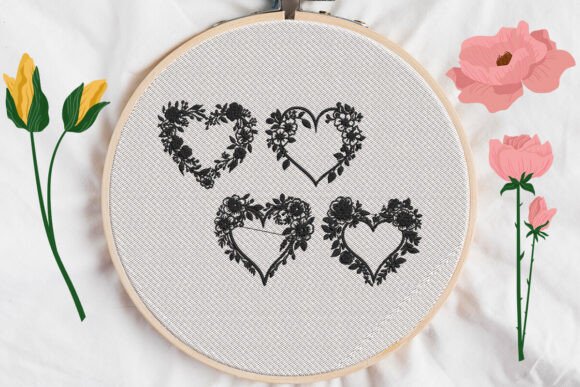
Valentine’s Day Decor Review
As an experienced embroidery designer who has spent years translating digital concepts into tangible, stitched assets for small businesses, I approach every new embroidery file with a critical eye. It is not enough for a design to simply look pretty on a screen; it must hold up under the needle, withstand the wear and tear of daily use, and elevate the brand it adorns. Today, I am reviewing the Valentine’s Day Decor machine embroidery design to determine its viability for commercial applications, specifically for small business merchandise, branded patches, and custom apparel.
The product description highlights that this lovely embroidery design can be used for various projects, such as home decor, apparel, gift items, and wall art. While these categories are broad, my focus here is strictly on the commercial potential. Can this design serve as a profitable asset for Etsy sellers, boutique owners, and creative studios? Let us break down the visual personality, practical application, and strategic considerations of using Valentine’s Day Decor in your business inventory.
First Impressions: Visual Personality and Brand Fit
When evaluating a design asset for small business merch, the first step is assessing its emotional resonance. The title Valentine’s Day Decor suggests a design that is likely elegant, playful, or perhaps rustic, depending on the specific graphic elements included in the file. For a Valentine’s theme to work in a professional context, it must avoid being overly saccharine or cluttered. Instead, it should strike a balance between festive charm and timeless appeal.
In my initial assessment, designs labeled with "Decor" often lean towards intricate patterns or stylized motifs rather than bold, minimalist logos. This presents both an opportunity and a challenge. The opportunity lies in creating unique, high-value gift items. The challenge is ensuring that the detail level does not get lost when scaled down for smaller applications like chest logos or cap fronts. If the design feels premium and cohesive, it can significantly enhance the perceived value of the finished product. If it feels generic, it may struggle to stand out in a crowded marketplace.
Real-World Business Applications
The true test of any machine embroidery design is its versatility across different mediums. Here is how Valentine’s Day Decor can be strategically deployed for various business types:
- Embroidered Patches: One of the most popular uses for thematic designs is creating branded patches. These can be sewn onto denim jackets, backpacks, or hats. If the design has clear boundaries and sufficient negative space, it will translate beautifully into a patch format, serving as a collectible item for customers.
- Staff Uniforms and Aprons: For bakeries, florists, or cafes, subtle branding is key. A well-executed apron embroidery featuring this design can add a touch of seasonal warmth to staff uniforms without overwhelming the garment. It signals attention to detail and care, which directly impacts customer trust.
- Tote Bag Design: Tote bags remain a staple for handmade brands and boutiques. Placing Valentine’s Day Decor on canvas totes creates an impulse-buy item perfect for gifting. The design acts as a mobile advertisement, increasing brand visibility whenever the bag is carried.
- Cap Embroidery: Caps are excellent for event merch. However, they require careful placement. A centered logo on a cap front can look professional if the design is balanced. This design could work well as a sleeve detail or a back-of-cap accent where the curve of the hat complements the flow of the embroidery.
- Product Packaging Accents: Beyond apparel, this design can be embroidered onto fabric tags attached to jewelry boxes, candle packaging, or wrapped goods. This adds a tactile, luxurious element to unboxing experiences, fostering deeper buyer engagement.
Strategic Considerations and Limitations
While the potential is high, there are specific areas where designers must exercise caution. Not every design fits every surface. When considering Valentine’s Day Decor for production, keep the following limitations in mind:
- Small Patch Sizes: If you plan to offer this design as a small patch (e.g., 2 inches or less), ensure the details are simplified. Fine lines and tiny text may merge together during stitching, resulting in a muddy appearance.
- Curved Surfaces: Embroidering on curved surfaces like caps or sleeves requires advanced hooping techniques. Complex designs may distort if the fabric tension is not perfectly managed.
- High Stitch Density: Designs with dense fills can become stiff and uncomfortable, especially on lightweight fabrics like t-shirts or thin aprons. Check the stitch count to ensure the final product remains soft and wearable.
- Fabric Texture and Color: Dark uniforms or heavily textured fabrics (like burlap or thick wool) can obscure fine details. Always test on the actual material intended for production. High contrast between thread colors and the base fabric is essential for readability.
- Frequent Washing: For items that will undergo frequent laundering, such as work shirts or kitchen aprons, the design must be robust. Loose threads or delicate outlines may fray over time, damaging the brand’s reputation for quality.
Impact on Brand Identity and Professionalism
Consistency is the cornerstone of strong brand identity. Using a cohesive set of design assets ensures that customers recognize your products instantly. If your brand is known for clean, modern aesthetics, a cluttered Valentine’s design might clash with your existing visual language. Conversely, if your brand leans towards handmade, rustic, or whimsical styles, this design could reinforce your aesthetic perfectly.
Professionalism in embroidery is reflected in the finish. A well-digitized file produces smooth stitches, clean edges, and no puckering. When customers see a crisp, high-quality embroidered patch or logo, it subconsciously communicates that your entire business values quality. This builds trust and justifies premium pricing. On the other hand, sloppy stitching or poor design choices can undermine even the best products.
Practical Designer Notes for Production
Before adding Valentine’s Day Decor to your production line, follow these essential steps to ensure success:
- Test in Black and White: Convert the design to monochrome to check contrast and balance. This helps identify if certain elements are too close together or if the composition feels heavy on one side.
- Check Hoop Size Compatibility: Ensure the design dimensions fit within your standard hoop sizes. If the design is large, verify that you have the equipment to handle it without multiple re-hooping, which can misalign the pattern.
- Review Thread Color Contrast: Select thread colors that pop against your target fabric. Use a printable mockup to visualize how the colors interact before committing to physical samples.
- Inspect Spacing and Density: Look closely at the digitization. Are there gaps where the fabric shows through unintentionally? Is the density appropriate for the fabric type? Adjustments may be needed in the software before stitching.
- Use Proper Stabilizer: The choice of stabilizer (cut-away, tear-away, or wash-away) depends on the fabric. Incorrect stabilization leads to puckering or shifting, ruining the design.
- Create a Mockup for Client Approval: If you are offering custom services, always provide a digital mockup for client approval. This manages expectations and reduces returns.
- Compare Beside Other Assets: Place the design next to your existing logo and other key graphics. Does it fit harmoniously? Consistency across all touchpoints strengthens recognition.
- Confirm Commercial Licensing: Most importantly, verify the licensing terms of the digital embroidery file. Ensure you have the right to sell finished goods made with this design. Unauthorized commercial use can lead to legal issues.
By carefully evaluating Valentine’s Day Decor through this lens, you can determine whether it is a valuable addition to your catalog. Remember, the goal is not just to create something decorative, but to create something that drives sales, enhances brand loyalty, and reflects the professionalism of your small business. With proper testing and strategic application, this design can be a powerful tool in your commercial embroidery toolkit.